CCAA: Launch of the 2025 Staff Performance Appraisal Campaign
Published: Saturday, 07 February 2026 12:48


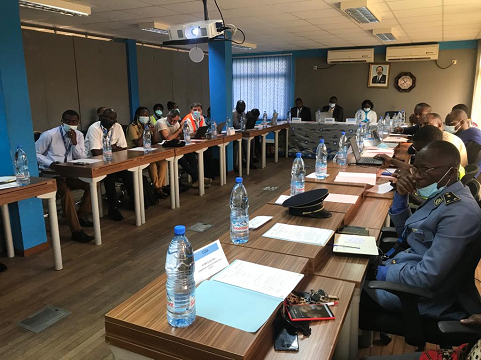
Deputy Director General, Mr. ALLABIRA MAMADOU, officially launched the campaign on February 4, 2025. The ceremony was attended by various heads of departments, who were briefed on the appraisal process and the new updates to be integrated into the 2025 evaluation cycle.

In accordance with the General Staff Regulations, every employee’s professional conduct must be evaluated with their active participation, following specific procedures and timelines defined by the regulations.
At the CCAA, the appraisal is conducted as an interview between the employee and their immediate supervisor. The objectives of this meeting are to:
- Review the employee’s performance based on previously assigned targets.
- Discuss areas of improvement, challenges encountered, progress points, and discipline.
- Gain a better understanding of the employee’s individual and professional expectations.
- Encourage and collaboratively define future objectives.
The standard annual passing grade for an employee is 13/20; any score below this threshold requires a formal justification from the supervisor.
In 2024, the participation rate for this exercise reached 89%. Notably, discipline significantly impacts staff evaluations. For instance, several documented cases of indiscipline at the CCAA in 2024 negatively affected final scores.
For the 2025 performance appraisal campaign, several innovations have been introduced:
- The inclusion of activity reports (monthly, quarterly, or semi-annual) is based on the employee's rank within their performance contract.
- Shifting the appraisal period to January of Year N+1, replacing the previous October-December window.
- The introduction of a performance tracking form to monitor appraisals within each department.
The Schedule:
The appraisal period will run from February 4 to 13, 2026, for head office staff, and from February 23 to March 6, 2026, for CCAA regional commands and department heads.
Staff appraisal offers numerous benefits: it facilitates targeted training to bridge skill gaps, supports career advancement and promotions, and justifies the awarding of bonuses. Ultimately, it serves as a vital tool for talent management and human resource optimization.
Translation: MKG/ARO-PRU